Have you ever held a glittering gold coin or gold bars UK and wondered about its journey from a raw chunk of earth to a finished piece of wealth and beauty? The transformation is a remarkable process that combines intense effort, precision, and innovation every step of the way.
The journey begins deep underground, where miners extract gold ore from the earth. At first glance, this ore looks nothing like a finished gold bar or coin—it’s just dull rock mixed with other minerals. To separate out the precious gold, miners crush the rock and wash the pieces to concentrate the heavy material. Next, they use chemical processes to extract the tiny particles of gold from the crushed ore. This produces impure gold blocks called doré bars, which appear rough and unrefined.
These doré bars then move on to the refining stage, where the real transformation begins. The bars are heated in powerful furnaces and subjected to methods like the Miller process (which uses chlorine gas) or electrolysis. These techniques strip away impurities and increase the purity of gold to an impressive 99.99 percent. When this glowing pure gold emerges, it is ready to be turned into something valuable.
The refined gold can be formed into gold bars using two main techniques: casting and minting. Casting involves pouring molten gold into sturdy molds. As the gold cools and solidifies, it forms thick, heavy bars with distinct markings from the cooling process—no two are quite the same, giving each bar a little character.
For minted bars, the process is a bit different. Pure gold is rolled into thin sheets, and then machines punch out bar-shaped blanks with precision. These blanks are cleaned until they shine, and then hydraulic presses stamp important information—like the refiner’s logo, weight, and purity—onto the bar’s surface. After a final polish, the finished bars have a gleaming, uniform look.
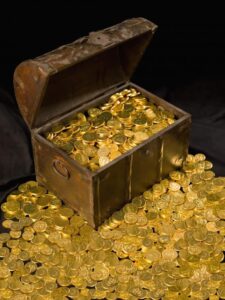
Gold coins require even more detailed craftsmanship. The thin gold sheets are cut into round blanks, each carefully weighed for accuracy. The blanks are polished and tumbled to remove any imperfections. Then, a stamping machine strikes each blank with elaborate designs, dates, and inscriptions using expertly engraved dies. Modern coins often include security features such as micro-engraving, holograms, or complex background patterns to prevent counterfeiting.
At every stage, strict quality control checks are applied. Inspectors use precision tools, microscopes, and accurate scales to ensure each bar and coin meets demanding standards. Any imperfection is quickly melted down and reprocessed to maintain only the highest quality.
So, from its beginnings as unremarkable rock to its transformation into a beautifully detailed bar or coin, gold undergoes a process that is both ancient and cutting-edge. The result is not just precious metal, but a lasting symbol of value and craftsmanship. Each gold coin and bar is a tiny piece of the earth, made precious and permanent through human ingenuity and attention to detail.